Showing posts with label St. Kitts. Show all posts

Friday, January 24, 2014

St. Kitts to St. Eustatius

Easy hop from St. Kitts to St. Eustatius (Statia)


After waiting three weeks for a boat part and good weather, we cruised over to St. Eustatius (Statia), an island that we had not previously visited.  The guidebooks warn that the mooring field can be subject to swells.

 Oranjestad

In the 1700’s Statia was the trading capital of the West Indies.  The water’s edge below the cliff was lined with shops and warehouse where one could buy goods from all over the world.  While other nations struggled to get along, Statia remained a neutral port.  One of Statia’s best customers at that time was the pesky American colonies.  Most of the guns used by the revolutionaries came through Statia.


Fort Oranje built by the Dutch in 1636

All good things must come to an end.  For Statia that happened on November 16, 1776 when they inadvertently became the first country to recognize the upstarts calling themselves the United States of America.  The American ship Andrew Doria under a rebel captain entered the harbor and gave a salute.  Not knowing it was an American ship under a rebel captain, the garrison at Fort Oranje returned the salute thus being the first to officially recognizing the new American nation.  The British were not amused.

Motivator and Sea Cloud  in Oranje Baai

The British, lacking any sense of humor, and because they were further irritated by the fact that Statia was selling arms to the American revolutionaries, declared war on Holland and sent Admiral Rodney to attack Statia. 

 Cemetery on the grounds of the Dutch Reform Church

After impounding the ships and their cargos in the harbor, destroying the harbor’s breakwater, and sacking and burning the town of Oranjestad, Admiral Rodney noticed that for a small population of merchants, they were having a lot of funerals.  Rodney ordered one of the coffins to be stopped and inspected.  It was full of coins and jewelry.  A little more digging in the graveyard revealed much more.  One hundred Jewish men were exiled to St. Kitts.

Ruins of the original shops and warehouse

Today most of the original trading infrastructure has slowly sunk into the sea or has been destroyed by hurricanes.

Mini-resort/restaurant

Among the ruins, some of the old warehouses have been restored and found new uses.  One guidebook author commented that each time he visits Statia he sees more evidence of restoration projects.

Lower and Upper Oranjestad

The small town of Oranjestad is divided between the Lower Town and Upper Town.

The Slave Trail

The walk between the two levels is somewhat arduous, and not clearly marked.

“Crook”

The town, however comes with a guide dog to show tourists the way.  We later found out the dog’s name is Crook, and for some reason he has taken on the duty of guiding tourists without wanting food or water.  The locals seemed to think he is somewhat of a pest.

Water diversion project

Also linking the two levels is this impressive water diversion project that we were told was built in the 50’s.

Brick sidewalks and stone streets

The most striking thing in upper town was the clean stone streets and brick sidewalks.  We noticed several infrastructure projects in progress as we strolled around.

Street maintenance project

Maintenance of the stone streets seemed to be ongoing.  The guy with the backpack’s job was to scrounge around for the correct size stone among the ruins, while the mason fitted the stones then grouted them in.


Many structures remaining from Statia’s merchant and plantation past are quite impressive.  The island seems to be promoting small scale ‘get-away” type vacation resorts rather than the large intrusive resorts found in so much of the Caribbean.


All of Statia coastal waters are part of a marine park.  The diving and snorkeling is reportedly excellent, and strictly controlled by The Statia National Marine Park.

 
More goats then people on Statia

Statia is what I call a two-day island.  Walking one can see almost everything in two days.  You should try and make those two days Thursday and Friday because with the high concentration of Seventh Day Adventist most everything is closed on Saturday.  On Sunday through Wednesday there is not much happening either.  We found that three nights of rolling from the swells was all that we could take – the guidebook was right.

Monday, January 6, 2014

Les Saintes to St. Kitts

First leg: Les Saintes to Deshaies

After waiting for a suitable weather window in Les Saintes, we decided to do a big hop to St. Kitts.  On a previous trip we had spent some time in Pointe-a-Pitre, Guadeloupe’s yacht haven, but were not inclined to do a repeat.  The island(s) of Guadeloupe is shaped like a butterfly, with Pointe-a-Pitre “at its ass,” according to one guidebook author.  I somewhat agree.  Our first leg was the 32 NM trip mainly in the lee of Guadeloupe to Deshaies where we anchored for the night.

Guadeloupe to St. Kitts

Using the narrow weather window provided, our second leg was to St. Kitts 80 NM away.  Previously we had visited Antigua (see: archived posting, Tots to the Queen, May 28, 2013 ).  While we enjoyed the island, we felt that we had seen most of the sites because on previous visits we found that we were weathered in for extended periods.  Besides, with the prevailing wind and waves out of the east or northeast during the winter, visiting Antigua feels like fighting to go east to eventually go west.  By heading to St. Kitts we had comfortable following seas.

2 NM Maritime Exclusion Zone

We had hoped to visit Montserrat on our trip north, but it was not in the cards for us.  In 1995 and again in 1997 eruptions from the Soufriere Hills volcano led to the exodus of nearly two thirds of the population.  In 2003 the dome collapsed and some of the population returned as restrictions were relaxed.  However, today there is a 2 NM maritime exclusion zone around the south side of the island and eruptions spewing steam and ash still occur.

Montserrat, not looking too inviting

The eruptions have destroyed the capital, Plymouth, and filled in the original harbor.  Visiting yachts now must anchor at the northwest end of the island which affords little protection from a north swell.  When I called to inquire about the possibility of a mooring, the harbor master said that due to the sea state it had been several days since he had be able to launch his boat.  We decided to give Montserrat a pass.

Carnival Ribbon Dancers

This makes our third visit to St. Kitts, and we always find it to be fun although the marina is not what one would call world class (see: archived postings Gibraltar of the Caribbean, dated Feb. 25, 2015; Cruisers vs. Cruisers, dated Feb 15, 2013; and Leeward Islands, dated Feb. 11, 2013).  St. Kitts was in the middle of their Carnival when we arrived (see: archived posting, Amplified Music, dated Aug. 4, 2013).  The New Year’s fireworks were quite impressive.

View from Twist, our favorite restaurant

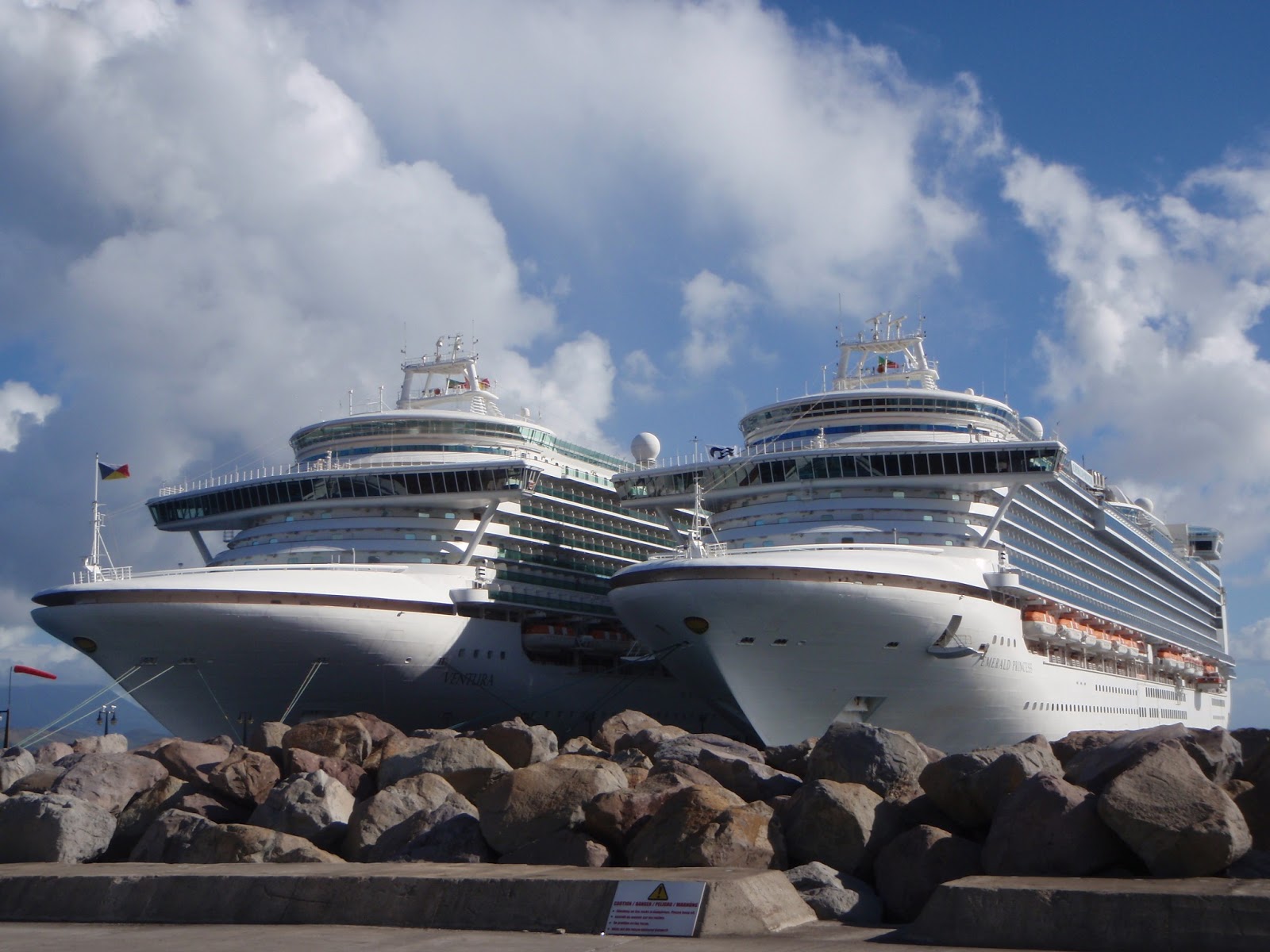
The biggest downside to St. Kitts is Internet access.  The Port Zante Marina provides free WiFi, but when the cruise ships dock at Port Zante their multiple WiFi signals destroys the marina’s weak signal.

This posting completed at Rituals, our morning coffee shop.

Wednesday, May 15, 2013

Repair vs. Replace

Normal Presentation

Upon arrival in St. Maarten our autopilot died.  By the time we left, I thought I had it resurrected.  But, 10 minutes into our crossing to St. Kitts it went out again.  We hand steered for the next 7 1/2 hours.

The next day:
7:15 AM Troubleshoot autopilot
8:00 AM Decide with 90% confidence the electric motor on the pump is out
9:00 AM On the way to breakfast we ask Charlie, the dock master if he knows where there is an electrical motor repair shop
9:05 AM Charlie doesn't know so he calls Percy, the taxi driver
9: 10 AM Percy arrives to take us to Neil, the electrician
(It's a small island and Percy drives fast)
9:15 AM Neil is not there, but Debbie, Neil's girlfriend/business manager says bring the pump in and he will take a look
9:30 AM Percy drops us off at the coffee shop for breakfast
10:30 AM Return to the boat and remove pump
11:15 AM Deliver the pump to Neil via bicycles

Neil Jeetlall

11:30 AM Neil says the good news is my diagnoses is correct; it's the motor.  The bad news is that it is the armature in the motor is shot.
1:00 PM Neil delivers the armature to Roderick, the only guy on the island that can rewind armatures
3:45 PM Neil picks me up at the marina
3:50 PM Neil picks up Brandon, Debbie's son from school
3:55 PM Roderick demos the rewound armature
(Neil drives faster than Percy)
4:10 PM We return to Neil's shop where he reassembles the motor and pump
4:30 PM Neil drops me off at the boat with the rebuilt pump


Total cost for the rebuild was $200 USD vs. a new pump from the US is $619 + shipping (apx. $120) + customs fees and a few days waiting if we were lucky.

We probably could have escaped customs fees by declaring "boat in transit" and providing the necessary documentation.  However, the locals pay upward to 85% import duty on repair parts.  Therefore, it is cheaper to repair rather than replace.  Might not be such a bad thing compared to US where everything is becoming disposable.

Should you find yourself in St. Kitts needing an electrician, contact:

Neil Jeetlall
1 (869) 668-4444
jet03@hotmail.com 

Monday, February 25, 2013

Gibraltar of the Caribbean

Brimstone Hill Fortress

Ft. Brimstone was constructed by African slave labor over a period of almost 100 years back when the French and English were squabbling over control of the Caribbean.  It is strategically situated on the northwest corner of St. Kitts and from there you can see six islands including Saba, St. Martin and Montserrat.


The first cannon was hauled up the hill in 1690 by the British with the intent of capturing the French built Ft. Charles on the shore below.


After successfully recapturing Ft. Charles, the British quarried the local volcanic rock, produced cement using limestone kilns, and built walls that range from 6’ to 10’ thick.


By 1736, Ft. Brimstone had 49 cannons, many were the 24-pounders that were considered the most formidable weapon of their time.


The fort comprises 11 different areas sprawled over 40 acres on three levels.


The lower placements sit 100’ to 300’ below the citadel on the top.


The fortress looks impenetrable, but it was taken by the French in 1782.  Eight thousand French troops laid siege to the fort that was defended by 1,000 soldiers from the Royal Scots.  The battle lasted 30 days and bought valuable time for Britain’s Admiral Hood and Admiral Rodney to inflict heavy damage to the French fleet.


After the British surrendered, the French graciously allowed the British to march out with full military honors.


The Treaty of Versailles returned the fort to British control.  Ft. Brimstone remained an active British outpost until 1852 when it was abandoned.


The Society for the Preservation of Brimstone Hill was founded in 1965 and turned the overgrown ruins into a tourist attraction.  In 1973 H.R.H. Prince Charles re-opened the first restoration.  While we were visiting, archaeologists were busy digging near some ruins and were excited to find that the ruins were formerly a latrine.  They interrupted their labor when Pollie showed an interest and attempted to recruit her.  Should you be interested, contact Caribbean Volunteer Expedition at www.cvexp.org

Friday, February 15, 2013

Cruisers vs. Cruisers

Carnival Cruise Lines

The cruisers from cruise ships have a different experience than us cruisers on the little boats.  We only share our boats with our cruising partner and occasional guests, while they share their boat with 3,000 new friends and 1,000 crew members.

Cruise terminal at Port Zante, St. Kitts

The cruisers off the small boats are generally in better shape and not quite as white (better tans) as the cruise ship cruisers.


In the cruise ship areas you do not find very many dinning opportunities because food is included with the price of the cabin.


Away from the cruise ship area you can usually find a restaurant popular with the small boat cruisers.


Besides the duty free jewelry stores, you do find some bars offering cheap drinks and WiFi because both of those items are expensive on the cruise ships.


For real deals on food and drinks, the small boat cruisers usually try to find places the locals patronize.

Old Treasury Building

The dividing line between the new cruise ship area and Basseterre, the capital city of St. Kitts, is the old treasury building that is now a museum and gate to the cruise ship area.  We sat and watched as numerous people from the cruise ships would peek out into the bustling city and then return to the “safety” of the cruise ship area.


We find that we are hustled for everything from taxi rides to pictures of us holding monkeys the closer we are to the cruise ship area.

The Circus

Unfortunately, many of the people on the cruise ships miss what the islands have to offer.


While the cruise ship areas tend to be clean, safe, and look like a fun shopping experience, Pollie often complains that they have the same junk from China that the last island’s cruise ship area had to offer.  Nothing made locally.

St. George's Anglican Church

Numerous island tours are available for the cruise ship cruisers, and we almost took one, but found it more economical and adventurous to share a rental car with another small boat cruising couple.  This church (constructed 1856-1859), like many sights, was only a short walk from our marina and the cruise ship area.

Independence Square (formerly a slave auction)

Many other points of interest are probably missed by the cruise ship cruisers who tend to stick to the cruise ship areas, or take guided tours.


When the cruise ships pull out, the cruise ship area becomes a ghost town, but the real city continues at full throttle.

Monday, February 11, 2013

Leeward Islands


After enjoying watching the large yachts in Falmouth Harbour, Antigua it was time to move on.


We knew we were going to miss some of the dinning opportunities around Falmouth and English Harbour.


While in Falmouth we took care of some much needed bottom cleaning and zinc replacement.

Morris Bay, Antigua

But it was not all work; we did get in some R&R. 

 Our sister ship, the Izzy R arriving Jolly Harbour

To prepare to leave, we staged on the west side of Antigua at Jolly Harbour.  There we met our friends on the Izzy R and watched the Super Bowl together.

Montserrat

From Antigua you have a choice of going north directly to St. Barts or Sint Maarten & St. Martin, or going east to Nevis and St. Christopher (St. Kitts).

Pinney’s Beach moorings

We chose to go east and made our first stop at Nevis.  The small island did not have much to offer, and their customs official’s interpretation of the rules prompted us to move on after spending only one night.

White House Bay, St. Kitts

Our next stop was much more enjoyable.  With the clearance from Nevis, we were allowed to visit the southern anchorages on St. Kitts for 7 days before checking in, but staying more than 24 hours in Nevis required a second visit to their customs office (???).


Our quiet anchorage in White House Bay was occasionally interrupted by dive boats delivering very white tourists to one of the many snorkeling sites around St. Kitts.


If it was good enough for the tourists, it was good enough for us.  Besides, we could access it for the back of our boat.
Gar

There were several varieties of fish, but it was not one of the better dive sites we have found.


This was the happening place on the beach, and they had a nice dinghy dock for us.

Star Clipper

The next day, Carambola was not as happening after the ship providing most of the customers left.


But, on down the beach we found a Jamaican place with killer smoothies and jerk chicken.


After two nights, we moved to a marina at the port in Basseterre, St. Kitts/Nevis’s capital.  When the cruise ships are in, this is a bustling place.  Once they are gone, the area known as Port Zante becomes a ghost town.  Basseterre is quite charming as they have made an effort to preserve the handsome old buildings including The Circus modeled after Piccadilly in London.